Women Make History in 2026: Deb Haaland, Keisha Lance Bottoms, Gina Hinojosa & Stacey Plaskett
Meet Deb Haaland, Keisha Lance Bottoms, Gina Hinojosa and Stacey Plaskett. See how their 2026 election victories changed the history of women in government.
 Shop the shirt in this photo ↗
The November 3, 2026 elections produced four notable firsts: Deb Haaland in New Mexico, Keisha Lance Bottoms in Georgia, Gina Hinojosa in Texas and Stacey Plaskett in the U.S. Virgin Islands. Their achievements are related, but each is historically distinct.
Three women won governorships in U.S. states. Stacey Plaskett won in the U.S. Virgin Islands, a U.S. territory. The distinction matters when discussing national “firsts.”
Why the 2026 election was a milestone for women
The 2026 midterm election brought an unusual concentration of breakthroughs in executive leadership. On November 4, the Center for American Women and Politics at Rutgers University reported that at least 17 women were expected to serve as U.S. state governors in 2027, surpassing the previous record of 14. That count was based on returns available at the time, not final certified tallies.
Within that national story, four women drew attention for distinct milestones. New Mexico elected Deb Haaland; Georgia elected Keisha Lance Bottoms; Texas elected Gina Hinojosa; and voters in the U.S. Virgin Islands chose Stacey Plaskett. The significance of each result is best understood by looking at the office, the community represented and the history that came before.
A win in a governor’s race is also different from the election of a legislature or Congress. Each contest is a separate vote. The candidates featured here won executive offices, but their victories do not mean that every part of state or territorial government changed party control.
Deb Haaland: New Mexico’s first Native American woman governor
Deb Haaland’s victory in New Mexico marked the first election of a Native American woman as governor of any U.S. state. A member of Laguna Pueblo, Haaland had already broken barriers as one of the first Native American women elected to Congress and later as the first Native American to serve as a U.S. Cabinet secretary, leading the Department of the Interior.
Her 2026 win came over Republican Gregg Hull. It was also part of a second New Mexico milestone: Rutgers noted that Haaland and lieutenant governor-elect Stephanie Garcia Richard formed the first all-women-of-color gubernatorial ticket elected by a U.S. state. The governor’s race was about more than one individual milestone—it changed the composition of a state’s top executive leadership.
Haaland’s election does not erase the long history of tribal nations governing themselves. Rather, it marks a first within the U.S. state-governor system, a specific public office from which Native American women had long been absent.
Keisha Lance Bottoms: Georgia’s first Black woman governor
Keisha Lance Bottoms won Georgia’s governor election after previously serving as mayor of Atlanta. Her victory made her the first Black woman elected governor of a U.S. state and the first woman elected governor of Georgia. Associated Press and Reuters coverage identified the result as a national first for a state governorship.
Bottoms defeated Republican Rick Jackson and succeeded a period of Republican control of Georgia’s governor’s office. The result also connected to Georgia’s longer political history: a state that has had influential Black elected leaders and organizers had never before elected a Black woman to its highest state executive office.
The distinction “of a U.S. state” is intentional. The 2026 election also produced a first in the U.S. Virgin Islands, which is a territory. Keeping state and territorial milestones separate respects the importance of both.
Gina Hinojosa: Texas elects its first Latina governor
Gina Hinojosa defeated Republican incumbent Greg Abbott in the Texas governor’s race, according to November 4 reporting from the Associated Press. She became the first Latina elected governor of Texas and its first Democratic governor since Ann Richards, whose term ended in January 1995.
Texas had elected women to the governor’s office before—most notably Miriam “Ma” Ferguson and Ann Richards—so Hinojosa was not the state’s first woman governor. Her first is specifically about Latina representation, alongside a change in the party holding the office.
That combination makes 2026 a distinctive year in Texas politics. It remains important to separate a governor’s victory from the makeup of the Texas Legislature and other offices, which voters select in their own races.
Stacey Plaskett: first woman elected governor of the U.S. Virgin Islands
Stacey Plaskett, who represented the U.S. Virgin Islands as a nonvoting delegate in the U.S. House, won the territory’s 2026 governor election with running mate Milton Potter. Local election-night reporting identified her as the first woman elected governor of the U.S. Virgin Islands.
The territory has elected its own governors since 1970. According to local reporting citing unofficial territorial returns, Plaskett and Potter received about 62.8% of the vote. Those early results were sufficient to avoid a runoff, although certification is a later step.
Because the Virgin Islands is a U.S. territory rather than a state, its governorship should not be counted among the 50 state governorships. Yet territorial leadership is part of American political history. Plaskett’s election is a milestone in the territory’s own democratic institutions and in women’s representation in executive government.
What do these four election victories have in common?
These women reached office through different political careers: federal executive service, leadership of a major city, state legislative service and representation of a U.S. territory in Congress. The common thread is that each won an office in which women from her background had not previously been elected.
The milestones also show why a broad label such as “women made history” needs careful explanation. Haaland’s first concerns Native American women in state governorships; Bottoms’s concerns Black women and a U.S. state; Hinojosa’s concerns Latina leadership in Texas; Plaskett’s concerns the first woman elected governor of the Virgin Islands. They are four different historical records, not one interchangeable claim.
Elsewhere in the 2026 election, women of different political parties also won notable firsts. The Rutgers tracker is a useful resource for the nationwide picture and for updates as more races are finalized.
What happens next—and where to check the results
On election night, news organizations may project winners before every vote has been counted. Government certification follows the legal canvass process. Because this article is dated November 4, 2026, readers should check official election offices for the most current results and any later revisions.
The Center for American Women and Politics at Rutgers publishes a regularly updated election analysis. For the women featured here, Associated Press, Reuters and established local Virgin Islands reporting provide additional background on the outcomes and their historical meaning.
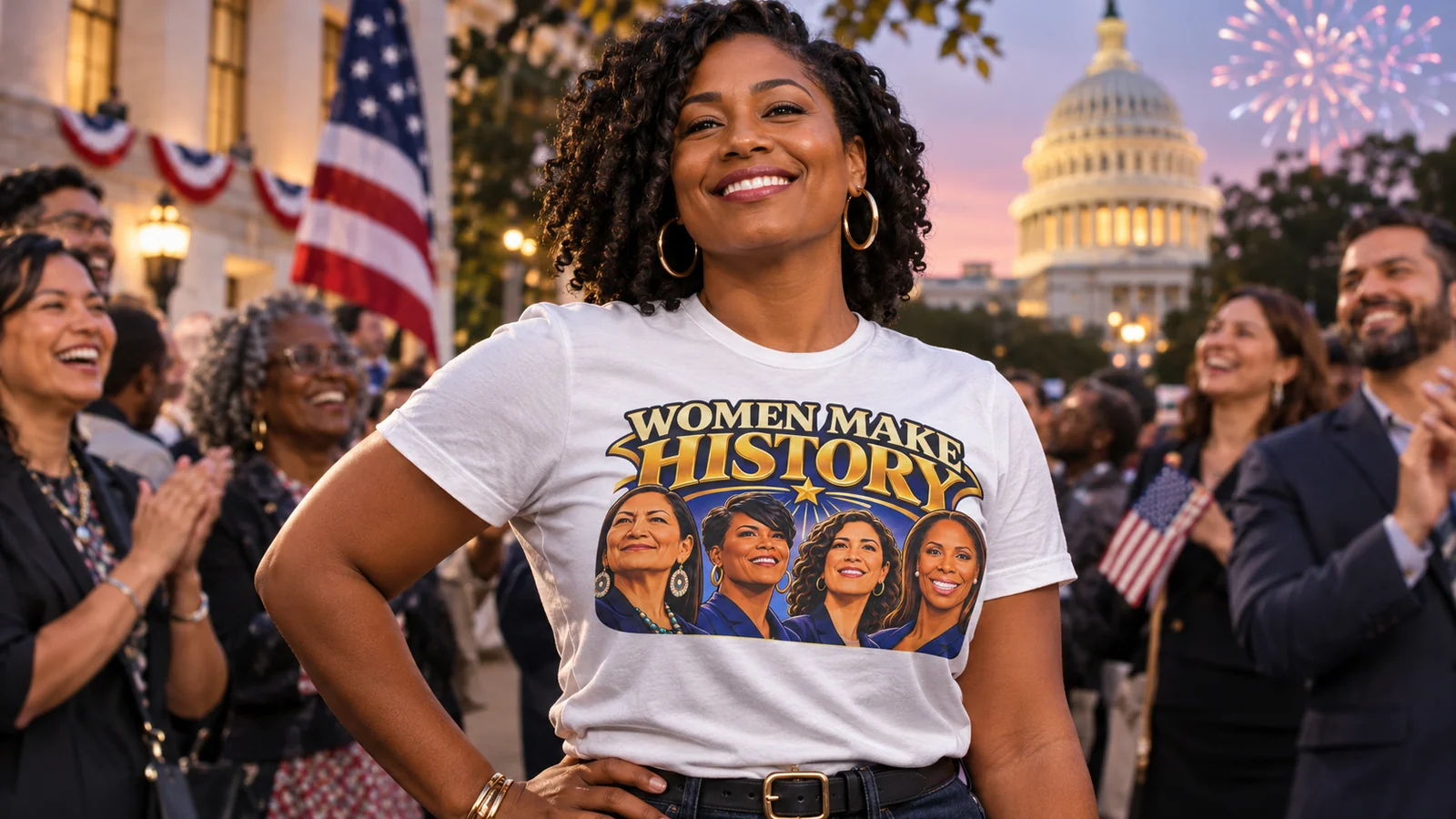
The Women Make History shirt shown in our illustration is an independently created commemorative design. Its appearance in this article is not an endorsement by the four women, their offices, campaigns or the news sources cited.
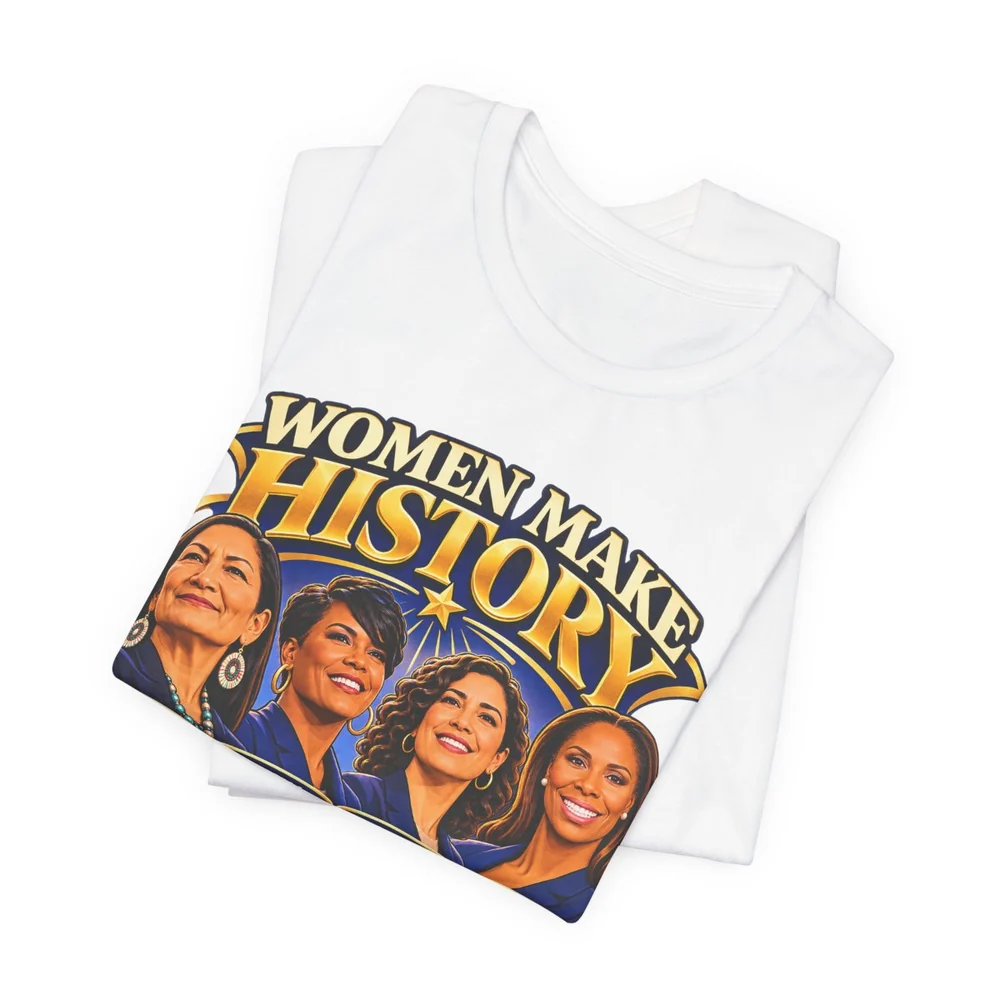
Women Make History — 2026 Illustrated Tee
Wear a piece of the moment. Choose your size and color when you shop.
Shop the shirt ↗Sources & further reading
These reports and official resources support this story. For final vote counts, check the state election office.
- Rutgers Center for American Women and Politics: 2026 milestones ↗
- Rutgers: detailed 2026 women candidates and governors tracker ↗
- NPR: Historic 2026 gubernatorial election firsts ↗
- Associated Press: Georgia elects Keisha Lance Bottoms ↗
- Associated Press: Gina Hinojosa wins Texas governor race ↗
- Reuters: Keisha Lance Bottoms and Stacey Plaskett firsts ↗
- St. John Source: Stacey Plaskett wins Virgin Islands governor race ↗
Information reviewed November 4, 2026. Election totals may change before certification.